
Before entering the story
The series now returns to a passage the rav has mentioned repeatedly: the healing of a princess within the story of the Seven Beggars. It brings together the ten kinds of song, the ten pulses, and the repair associated with Tikkun HaKlali. Reb Noson develops that passage in Hilchos Tola’im, the laws concerning worms, in Likutey Halachos. The rav intends to study that explanation after first hearing the story itself.
This shiur does not yet reach the princess’s healing. It stays with the opening: a king gives his kingdom to his only son and tells him how to live when the kingdom is lost. The rav had intended to move further, but sees enough avodah in these first words to spend the whole evening on them.
He approaches the story with restraint. Its meanings are deeper than the explanations he can offer. He intends to follow Reb Noson’s guidance toward practical service, not claim to have uncovered all its secrets. Even reading and repeating the story has value. He describes reviewing Rebbe Nachman’s stories himself and with his children, allowing their words to become familiar before trying to explain them.
The account of the story’s telling reinforces that sense of wonder. In Sichos HaRan 149, Reb Noson records that he was at home in Nemirov when the first part was told on Friday night. A friend later repeated it to him, and he stood trembling and astonished. He traveled to hear more; the story unfolded over several occasions. The opening had followed discussion of a letter Reb Noson had written encouraging his friend to be happy. Rebbe Nachman answered by beginning: “I will tell you how they were happy.”
The surviving story describes six days of the wedding celebration. Its seventh day and the conclusion of the opening king’s story were not revealed. The printed afterword connects that missing conclusion with the coming of Mashiach. It also records Rebbe Nachman saying that even if he himself had known no other matter, this story alone would have been a very great chiddush, a remarkable new teaching. The rav paraphrases this as showing why its revelation alone would have been worthwhile; the printed statement concerns what Rebbe Nachman knew, rather than a listener’s claim to understand the whole story. The afterword describes much Torah and moral teaching within it, with allusions to earlier tzaddikim, while insisting that its secrets remain concealed.
The rav associates its seven beggars with the seven shepherds, the figures familiar from the Ushpizin: Avraham, Yitzchak, Yaakov, Moshe, Aharon, Yosef, and Dovid. He also connects the thirteenth story with the Zohar’s thirteen-petaled rose, Knesses Yisrael, and the completion of the seven days with future redemption. These are interpretive associations. The Zohar’s rose teaching does not itself identify the thirteenth Breslov story. The lost princess in the first story gives a related image of rescue; neither story’s unrevealed ending should be supplied from imagination.
The king gives over his kingdom
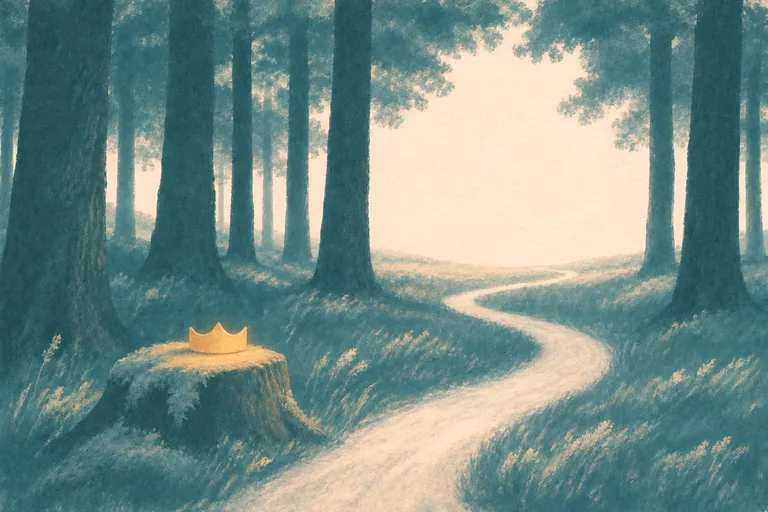
A king has an only son. He wishes to give the kingdom to him during his own lifetime. He makes a great feast, attended by the ministers and nobles, with music, performances, and every kind of celebration. The country rejoices at the honor of the king giving the kingdom to his son.
The rav reads this as an image of Matan Torah. Israel is Hashem’s beloved child:
וְאָמַרְתָּ אֶל־פַּרְעֹה כֹּה אָמַר ה׳ בְּנִי בְכֹרִי יִשְׂרָאֵֽל׃
You shall say to Pharaoh: Thus says Hashem: Israel is My son, My firstborn. — Exodus 4:22
At Sinai, the child receives a royal task:
וְאַתֶּם תִּהְיוּ־לִי מַמְלֶכֶת כֹּהֲנִים וְגוֹי קָדוֹשׁ אֵלֶּה הַדְּבָרִים אֲשֶׁר תְּדַבֵּר אֶל־בְּנֵי יִשְׂרָאֵֽל׃
You shall be to Me a kingdom of priests and a holy nation. These are the words that you shall speak to the children of Israel. — Exodus 19:6
הָיְתָה יְהוּדָה לְקׇדְשׁוֹ יִשְׂרָאֵל מַמְשְׁלוֹתָֽיו׃
Yehudah became His sanctuary, Israel His dominion. — Psalms 114:2
In this reading, Hashem entrusts Israel with responsibility for the world through Torah. He continues to sustain and govern everything; “during the king’s lifetime” is part of the human story’s image, not a possibility of mortality in Hashem.
The rav recalls the Midrash’s account of the stillness at Sinai: birds do not call, creatures do not move about as usual, and the world listens. Shemos Rabbah 29:9 gives that picture of the Divine voice heard in a world fallen silent. It supports the rav’s image of a celebration whose significance extends beyond those directly receiving Torah.
The relationship is also described through partnership:
וָאָשִׂם דְּבָרַי בְּפִיךָ וּבְצֵל יָדִי כִּסִּיתִיךָ לִנְטֹעַ שָׁמַיִם וְלִיסֹד אָרֶץ וְלֵאמֹר לְצִיּוֹן עַמִּי־אָֽתָּה׃
I have placed My words in your mouth and covered you with the shadow of My hand, to plant the heavens and establish the earth, and to say to Zion: You are My people. — Isaiah 51:16
The word ami, My people, is read also as imi, with Me. In the teaching the rav invokes, Israel serves alongside Hashem in sustaining and repairing the world through Torah. Moed Katan 16b similarly gives the striking image of a tzaddik’s prayer overturning a decree. These are teachings about the power Hashem grants, not independent power outside Him.
Torah is the pattern through which Creation is made, and the world’s continuing existence is bound to Torah:
כֹּה אָמַר ה׳ אִם־לֹא בְרִיתִי יוֹמָם וָלָיְלָה חֻקּוֹת שָׁמַיִם וָאָרֶץ לֹא־שָֽׂמְתִּי׃
Thus says Hashem: If not for My covenant of day and night, I would not have established the laws of heaven and earth. — Jeremiah 33:25
Nedarim 32a records Rabbi Eliezer’s reading of that covenant as Torah. The rav puts this strongly: if Torah were to cease entirely, the world could not continue. He emphasizes the responsibility this gives Israel: receiving the kingdom means that our Torah and avodah matter to the world. The king is honored when the son accepts that task and, through it, acknowledges the King who entrusted it to him.
The warning nobody expects
At the height of the feast, the king tells his son that he foresees him losing the kingdom. The instruction that follows is surprising. He does not simply give precautions against a political defeat. He tells the son not to surrender to sadness when he falls from kingship.
Remain joyful, he says, and I too will be joyful. If you become sunk in sadness because you are no longer king, I will be glad that you are no longer king, because you have shown yourself unfit for kingship: you could not hold yourself in joy after losing the position. But if you remain joyful, my joy will be greater still.
Those severe words belong to the story itself. The rav hears them as a question about what kingship means. Is the son a king only while everyone treats him as one? Or does he carry something that can remain alive when the throne disappears?
In the Matan Torah reading, the warning looks ahead to the chet ha’egel, the exiles, and the falls that will follow great closeness. The rav then makes it personal. After an aveirah, a person may assume that Hashem chiefly wants him to become miserable. Otherwise, he fears, happiness would prove that he does not care about what he did.
The king’s instruction challenges that assumption. There is an avodah of teshuvah: acknowledge the wrong, repair what must be repaired, and return. None of that requires the conclusion that the person himself is finished. The rav explicitly rejects whitewashing the aveirah or pretending everything is fine. His point is that teshuvah and atzvus are different things.
He distinguishes a broken heart, shivrein halev, from a deadened heart. Tanya, chapter 31, makes this distinction: living remorse still contains movement and life, while atzvus closes the heart like a stone. The rav uses the familiar expression that nothing is as whole as a broken heart; he uses it to express the distinction between remorse and despair. Tanya’s actual distinction supports the teaching without settling the saying’s origin.
Tanya, chapter 26, also explains why heaviness weakens a person’s ability to struggle against the yetzer hara. The rav returns to the letter allusion in Eitz HaDaas Tov V’Ra: the final letters can be rearranged into the defective spelling of atzeves. His point is the damaging aftermath of a fall, not a literal statement that the letters already spell atzvus in order. The aveirah needs teshuvah; the despair that follows can make the return harder still.
The son’s continuing joy tells the king that he still believes in the relationship and in the possibility of return. This is an avodah of refusing to surrender one’s identity, not a diagnosis that someone with clinical depression is unworthy of Hashem’s love.