
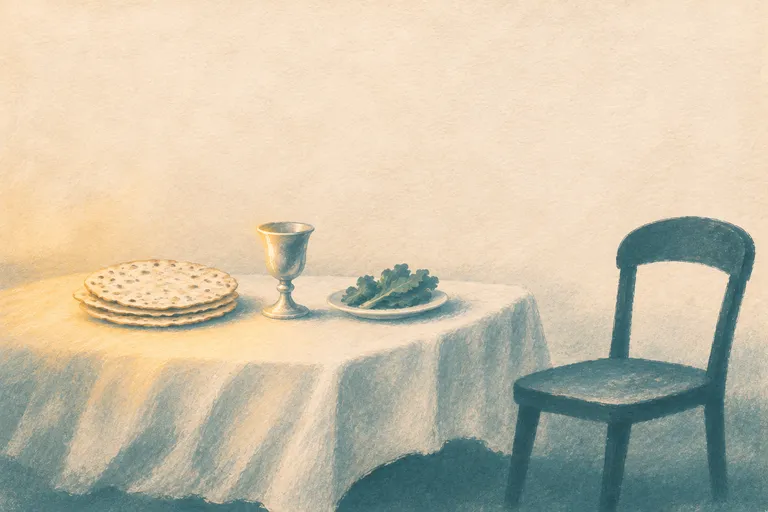
Purim is preparation for Pesach
Purim does not have to end when the costumes are put away. Its work can prepare a person for Pesach: learning to recognize that what appeared to be the end of the story may become part of the deliverance itself.
The series has been connecting Tikkun HaKlali, tikkun habris, and simcha. The rav had intended to turn to the Seven Beggars story, with its account of saving the princess. Instead, he follows another route through the same subject: from Purim to Parshas Parah and then to Pesach. The detailed interpretation of the story is deferred.
Likutey Moharan II:74 begins with that sequence. After Purim we read Parshas Parah, the Torah passage about purification from contact with the dead, in preparation for bringing the korban Pesach in purity. The passage is about the ordinary preparation for bringing the offering in purity; the separate laws for a communal offering in impurity are outside this discussion. Rebbe Nachman also sees an inner movement from pur, the lot associated with Purim, to parah, the red cow.
Why is the festival named after Haman’s lot? It might have been named after Esther, Mordechai, or the deliverance. The lot appears to be an incidental detail in the enemy’s plan, and a threatening detail at that.
עַל־כֵּן קָֽרְאוּ לַיָּמִים הָאֵלֶּה פוּרִים עַל־שֵׁם הַפּוּר עַל־כֵּן עַל־כׇּל־דִּבְרֵי הָאִגֶּרֶת הַזֹּאת וּמָֽה־רָאוּ עַל־כָּכָה וּמָה הִגִּיעַ אֲלֵיהֶֽם׃
Therefore they called these days Purim, after the pur; therefore, because of all the words of this letter, what they had seen concerning this matter, and what had happened to them. — Esther 9:26
The rav explains that this detail contains the movement of the entire festival. Haman attempts to strengthen judgment against the Jewish people. The very situation he brings about is turned toward their rescue. Purim takes its name from what appeared to be the threat because that threat has been overturned.
What it means to sweeten judgment
Hamtakas hadinim, sweetening judgments, is not merely finding a nicer description for something unpleasant. The rav describes returning to the root of the judgment: recognizing that the painful, constricted form in which something reaches us does not reveal its whole source in Hashem’s love.
He follows the Baal HaTanya’s teaching that concealed good comes from a higher world than the good that is readily recognizable. The rav therefore speaks of the judgment, at its root, as the greatest good and chesed, even while we experience its painful form as judgment. This is an avodah of faith within the person’s relationship with Hashem. It does not make the experience of suffering imaginary or give an observer knowledge of why another person is suffering.
Purim gives concrete examples of reversal. Esther’s being taken into Achashverosh’s palace is terrifying, not a short inconvenience; she remains there for years, surrounded by a world alien to her holiness. Yet her position becomes the means through which the people are saved. Haman builds a gallows for Mordechai, and it becomes the instrument of Haman’s own downfall. The house amassed by Haman is given to Esther, who appoints Mordechai over it. These reversals are described in Esther 7:10 and 8:1–2. What Haman gathered to strengthen himself ends up serving the people he wanted to destroy.
The rav uses the startling Purim expression baruch Haman to evoke recognition of that reversal: something experienced as a curse can be revealed as serving a blessing. This is not approval of Haman’s wickedness. The kabbalistic source itself distinguishes the holy spark sustaining something from the evil surrounding it, and warns against deliberately directing blessing toward the evil. The expression belongs to that Purim teaching, not to a general instruction to bless wrongdoing.
The possibility of v’nahafoch hu, a reversal from within, is what we carry forward toward Pesach.
From pur to parah
The rav develops the letter allusion through the five final letters, מנצפך: mem, nun, tzadi, peh, and kaf. Using their ordinary numerical values, they total 280, the value of par, פר. They are associated in this kabbalistic language with five gevuros, forms of restraint and judgment. A final letter closes a word; it gives the rav an accessible picture of that restraining quality.
The word pur, פור, places a vav between the peh and reish. In the passage in Pri Etz Chaim associated with this teaching, Haman’s lot is read through that insertion and his attempt to overpower Mordechai through judgment. The added letters of Purim are connected with binah and the reversal of the curse through Esther. The rav gives the broad direction of this account rather than a complete technical exposition.
Parah, פרה, becomes an image of judgment that can be sweetened at its source. The cow is red, a color associated here with judgment:
זֹאת חֻקַּת הַתּוֹרָה אֲשֶׁר־צִוָּה ה׳ לֵאמֹר דַּבֵּר ׀ אֶל־בְּנֵי יִשְׂרָאֵל וְיִקְחוּ אֵלֶיךָ פָרָה אֲדֻמָּה תְּמִימָה אֲשֶׁר אֵֽין־בָּהּ מוּם אֲשֶׁר לֹא־עָלָה עָלֶיהָ עֹֽל׃
This is the statute of the Torah that Hashem commanded, saying: Speak to the children of Israel, and let them take for you a completely red cow, without a blemish, upon which no yoke has been placed. — Numbers 19:2
The plain requirement of “completely red” concerns the animal’s qualifying appearance and condition. In the rav’s spiritual reading, its redness also expresses the intensity of judgment. Yet this very animal becomes part of the purification of someone who has encountered death, the most severe expression of judgment in his account.
וְאָסַף ׀ אִישׁ טָהוֹר אֵת אֵפֶר הַפָּרָה וְהִנִּיחַ מִחוּץ לַֽמַּחֲנֶה בְּמָקוֹם טָהוֹר וְהָיְתָה לַעֲדַת בְּנֵֽי־יִשְׂרָאֵל לְמִשְׁמֶרֶת לְמֵי נִדָּה חַטָּאת הִֽוא׃
A pure man shall gather the ashes of the cow and place them outside the camp in a pure place. They shall be kept for the congregation of the children of Israel for water of purification; it is a purification offering. — Numbers 19:9
The ashes are efer, אפר: the letters of פר joined to an aleph. The rav reads the aleph as gathering the divided judgments back toward their root in oneness. The thing that appeared to embody judgment becomes the means of purification. The Torah’s process uses ashes with water and its prescribed stages; the letter teaching is an explanation of the avodah, not a replacement for those laws.
There is a small numerical detail in the passage as presented: פור totals 286, while פרה totals 285; they correspond when one adds a kollel, counting the word as a whole, to פרה. They are not simply equal without that convention. Likewise, the five letters total 280 by ordinary values, rather than by the alternative higher values sometimes assigned to final letters.
The rav also draws attention to the red cow’s paradox: this process purifies someone who has become tamei, while those preparing it can themselves become tamei. Bamidbar 19:7–8 describes the priest and the person burning the cow washing and remaining impure until evening. The spiritual reading seeks purification through what looks like the very place of judgment; it does not erase the distinct practical rules.
The larger point is the preparation. Purim trains us to see a reversal in what seemed wholly against us. Parshas Parah carries that pattern into purification from the encounter with death. Pesach will bring it into the experience of freedom.
Lips, a flower, and flowing myrrh
Rebbe Nachman finds this movement in a verse of Shir HaShirim:
לְחָיָו כַּעֲרוּגַת הַבֹּשֶׂם מִגְדְּלוֹת מֶרְקָחִים שִׂפְתוֹתָיו שֽׁוֹשַׁנִּים נֹטְפוֹת מוֹר עֹבֵֽר׃
His cheeks are like a bed of spices, towers of fragrant herbs; his lips are lilies, dripping flowing myrrh. — Song of Songs 5:13
On its plain level, the verse describes the beloved through fragrance, beauty, and lips. The teaching then reads its images as allusions. The lips evoke peh sach, a mouth that speaks, the familiar reading of Pesach. In the kabbalistic account the rav invokes, Egypt is also an exile of speech, and leaving Egypt restores speech.
The shoshanah, the flower, is associated with Esther. שושנה and אסתר both total 661. The flowing myrrh points toward Mordechai through mor dror, the association made in Chullin 139b. Dror also evokes freedom. Thus the images of Esther and Mordechai become a way into the speech and freedom of Pesach. The word mor here is myrrh; it should not be confused with the different Hebrew word for bitter that will be used in explaining maror.
A further allusion appears in the Torah’s command about Pesach:
אֶת־חַג הַמַּצּוֹת תִּשְׁמֹר שִׁבְעַת יָמִים תֹּאכַל מַצּוֹת כַּֽאֲשֶׁר צִוִּיתִךָ לְמוֹעֵד חֹדֶשׁ הָֽאָבִיב כִּי־בוֹ יָצָאתָ מִמִּצְרָיִם וְלֹא־יֵרָאוּ פָנַי רֵיקָֽם׃
You shall observe the Festival of Matzos: for seven days you shall eat matzos, as I commanded you, at the appointed time in the month of spring, for in it you left Egypt; and they shall not appear before Me empty-handed. — Exodus 23:15
The initials of the final five words, ממצרים ולא יראו פני ריקם, supply the letters of פורים. In their actual order the initials are מויפר; they must be rearranged to spell Purim. Rebbe Nachman calls this a tziruf, a combination of the letters, and connects Purim with the ability to be careful about chametz.
The printed teaching says that he stopped in the middle and did not reveal more. It also preserves an unfinished statement about beginnings having formerly been from Pesach. We should let that unfinished point remain unfinished. The rest of this shiur develops the connection through other teachings; it does not claim to supply Rebbe Nachman’s undisclosed continuation.
Why the bris belongs in this discussion
The connection to tikkun habris is not an added subject after the discussion of joy. It is part of what the rav is tracing through both festivals.
He invokes the Arizal’s account linking the Egyptian exile with the damage associated with Adam’s separation from Chavah for 130 years. The earlier Gemara in Eruvin discusses that period and involuntary emissions; the connection between those souls and Egypt belongs to the kabbalistic interpretation, rather than to the simple narrative in Bereishis.
On the side of redemption stand dam Pesach and dam milah, the blood of the Pesach offering and circumcision. Rashi on Shemos 12:6 brings the teaching that these two mitzvos were given to the people as they approached redemption. The Torah also connects circumcision with eating the offering:
וְכִֽי־יָגוּר אִתְּךָ גֵּר וְעָשָׂה פֶסַח לַה׳ הִמּוֹל לוֹ כׇל־זָכָר וְאָז יִקְרַב לַעֲשֹׂתוֹ וְהָיָה כְּאֶזְרַח הָאָרֶץ וְכׇל־עָרֵל לֹֽא־יֹאכַל בּֽוֹ׃
When a stranger dwells with you and would make the Pesach offering to Hashem, every male of his shall be circumcised, and then he may approach to make it, and he shall be like a native of the land; but no uncircumcised male shall eat of it. — Exodus 12:48
The rav notes the rule, also stated by Rashi on this verse, that an uncircumcised male cannot eat it even when circumcision was not performed because of danger, such as the deaths of brothers after circumcision. That is a restriction concerning the korban, not permission to perform a dangerous circumcision. The source distinction preserves his point: the connection between milah and Pesach is fundamental even where the person is not blameworthy for his condition.
Joy, the bris, and the liberation of Pesach are therefore being approached as connected parts of one avodah. The question is what that connection asks us to do with the parts of life that still taste bitter.